
Quantum Governance Research Center
Mission
Quantum computing is already changing the way institutions must think about data protection, infrastructure resilience, and long-term accountability.
Encrypted data is being collected today with the expectation that future quantum capabilities may make it readable. This creates a governance challenge for any organization responsible for information that must remain confidential for years or decades.
The GCS Quantum Governance Research Center helps institutions prepare for that reality.
The Center produces original research, policy analysis, and governance guidance that supports the evolution of the Cybersecurity Sustainability Standard™ Founder’s Edition. Its work focuses on post-quantum readiness, cryptographic migration, infrastructure dependency, sovereignty risk, and the long-term protection of sensitive data.
This is not a technology lab. It is a governance research function focused on the accountability questions quantum readiness now requires.

Research Focus Areas
-
Post-quantum migration is more than a technical transition. It requires leadership oversight, clear accountability, phased planning, vendor coordination, and board-level visibility.
The Center examines how organizations can govern migration timelines, prioritize systems based on confidentiality duration, and manage the operational realities of cryptographic transition.
-
Quantum-secured networks and quantum-enabled services are becoming part of broader national and regional digital infrastructure.
The Center studies when quantum capabilities move beyond enterprise technology and become public-interest infrastructure. This includes questions of access, sovereignty, resilience, concentration risk, and the role of quantum infrastructure in rural and under-resourced communities.
-
Quantum technology is shaped by export controls, sanctions regimes, national security restrictions, data sovereignty rules, and jurisdictional differences.
The Center tracks how these policy conditions affect organizations operating across borders, especially where quantum services are hosted, who controls access, and how regulatory fragmentation creates governance gaps.
-
Post-quantum migration carries financial and operational costs that many organizations have not yet modeled.
The Center examines transition costs across organizational tiers, from critical infrastructure operators to resource-constrained institutions. It also studies how delayed migration can create systemic risk across sectors, supply chains, and public services.
-
Quantum governance must also account for environmental impact.
The Center examines the energy, infrastructure, and sustainability implications of quantum computing environments, advanced data centers, and post-quantum migration planning. This work connects quantum readiness to the Environmental Dimension of the Cybersecurity Sustainability Standard™.
The Research Center organizes its work across five areas that connect directly to the Cybersecurity Sustainability Standard™ Founder’s Edition.
Anchored to the Standard
The Quantum Governance Research Center directly supports the Cybersecurity Sustainability Standard™ Founder’s Edition.
The Standard’s Technological Dimension includes a dedicated sub-domain for Cryptographic Integrity and Quantum Readiness. The Research Center’s work supports four core controls:
CS-TECH-05: Cryptographic Asset Inventory
Requires organizations to maintain an inventory of cryptographic assets, including systems, algorithms, protocols, certificates, key management practices, and dependencies.
CS-TECH-06: Post-Quantum Migration Roadmap
Requires a leadership-approved migration roadmap with phased milestones, system scope, accountability assignments, and governance-level progress tracking.
CS-TECH-07: Cryptographic Agility
Requires organizations to demonstrate the documented and tested ability to replace cryptographic components without full system replacement.
CS-TECH-07A: Harvest-Now-Decrypt-Later Classification
Requires organizations to classify systems and data based on confidentiality duration and exposure to harvest-now-decrypt-later risk.
The Research Center’s publications and policy analysis help organizations interpret these requirements and prepare for future updates as quantum conditions evolve.
Global Scope and Regional Lens
Quantum readiness is not uniform.
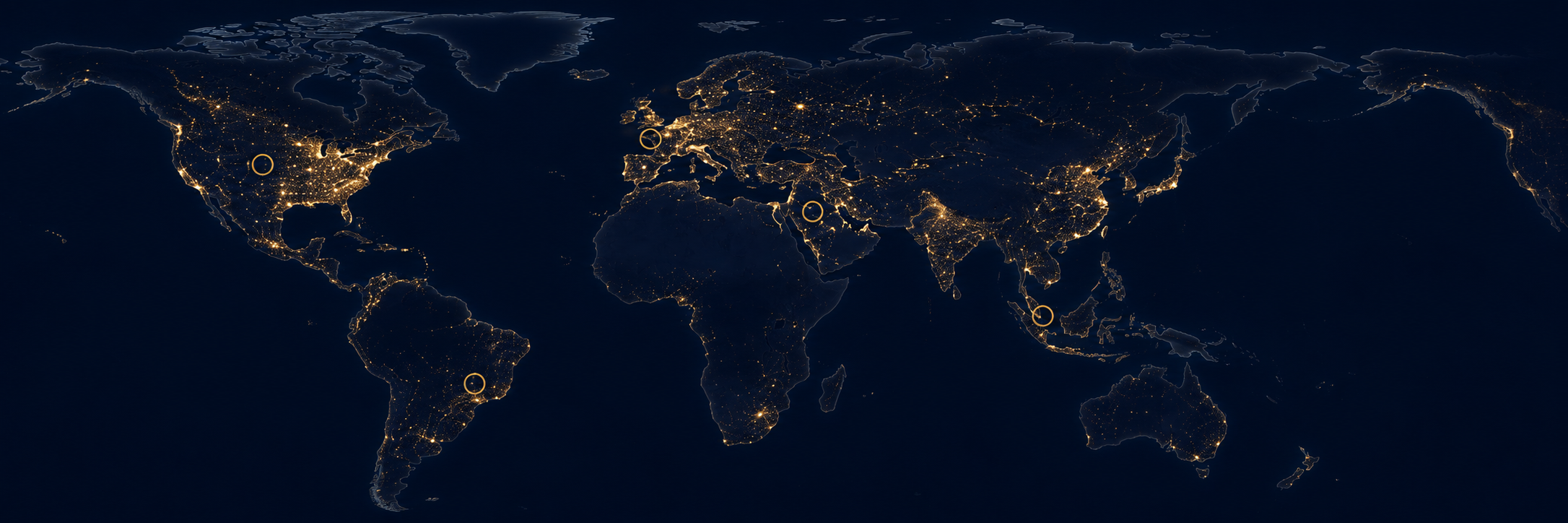
Migration timelines, regulatory expectations, infrastructure access, vendor availability, and institutional capacity vary by region and sector. The Research Center applies a global lens to these differences.
Its work covers regions where post-quantum guidance is already emerging, including the United States, the European Union, and select Asia-Pacific jurisdictions. It also examines regions where quantum readiness has not yet reached governance-level attention, even though long-term data exposure is already present.
A rural health system in sub-Saharan Africa that stores patient data for decades may face the same future confidentiality risk as a financial institution in London. The difference is access to resources, guidance, infrastructure, and institutional support.
This reflects a core principle of the Cybersecurity Sustainability Standard™ Founder’s Edition: rural and under-resourced communities are primary audiences for cybersecurity governance, not secondary considerations.
Publications and Outputs
The Quantum Governance Research Center produces research briefs, governance guidance documents, policy analysis, and contributions to the CSST Intelligence Brief.
Its publications are designed for board members, executive leaders, CISOs, GRC and compliance teams, ESG officers, policy analysts, academic researchers, development institutions, public-sector leaders, and standards stakeholders.
The goal is not to replace technical guidance. The goal is to help decision-makers understand quantum readiness through governance, accountability, resilience, and long-term institutional risk.
Inaugural publications are in development.
Advisory and Collaboration
The Research Center engages with academic institutions, cybersecurity authorities, standards bodies, development organizations, and policy stakeholders on quantum governance questions.
Its work is designed to complement technical research, not duplicate it. Where technical research focuses on what quantum capabilities can do, the Research Center focuses on what governance must require in response.
The Research Center welcomes collaboration with researchers, institutions, policymakers, and organizations working on post-quantum readiness, cryptographic transition, digital public infrastructure, sovereignty risk, and cybersecurity sustainability.
Partnership Model
The Quantum Governance Research Center operates within the institutional structure of GCS Advisory Group, a global cybersecurity governance advisory consortium and standards body.
The Center’s work is grounded in GCS Advisory Group’s broader mission to strengthen digital resilience, governance capacity, and cybersecurity sustainability across sectors and regions.
Research partnerships are designed to work within existing academic, policy, institutional, and development frameworks. The goal is not to create parallel structures. The goal is to contribute governance research that partners can apply within the programs, systems, and communities they already serve.
Connect with the Research Center
Organizations, researchers, policymakers, and institutions interested in quantum governance research, partnership opportunities, or forthcoming publications are invited to connect with the Quantum Governance Research Center.