Cybersecurity Sustainability in a Digital World
cybersecurity sustainability
Cybersecurity sustainability is not simply a Standard.
It is how institutions govern cyber risk over time.
The Cybersecurity Sustainability Standard™ Founder’s Edition defines how institutions establish accountability, measure resilience, and sustain cybersecurity outcomes across changing technology, regulatory, and operating environments.
This work is grounded in Digital Public Infrastructure, AI, quantum readiness, institutional resilience, and the systems that governments, enterprises, and communities rely on to securely operate, participate, and build trust in the digital economy.
Why Traditional Cybersecurity Falls Short
Many organizations still struggle to move from reactive cybersecurity to governance models that can withstand pressure over time. Traditional approaches often depend on resource-heavy tools, fragmented processes, and short-term decisions that create technical debt, operational fragility, and institutional risk.
Our methodology shifts organizations toward lifecycle-focused strategies, clearer accountability, stronger governance structures, and resilience models that extend system value, protect communities, and support long-term trust.
Cybersecurity sustainability is a shared responsibility across technology teams, leadership, policy stakeholders, and the communities affected by digital systems. Our work positions cybersecurity as more than a defensive function. It becomes a foundation for institutional continuity, public trust, and responsible digital growth.
The Cybersecurity Sustainability Standard™ Founder’s Edition
The Cybersecurity Sustainability Standard™ Founder’s Edition (CSST) defines cybersecurity sustainability as a measurable and accountable governance discipline across five interconnected dimensions: Organizational, Technological, Social, Economic, and Environmental.
The Standard includes 160+ controls, tiered evidence expectations calibrated to organizational capacity, and explicit conformance thresholds. It is designed to help institutions evaluate whether cybersecurity practices are not only compliant, but durable, measurable, and capable of sustaining trust over time.
The Standard integrates with NIST CSF 2.0 and ISO/IEC 27001, and maps to global governance, privacy, AI, cyber incident disclosure, and sustainability-related obligations. It supports alignment across jurisdictions and policy environments where cyber risk, technology adoption, public infrastructure, and institutional accountability increasingly intersect.
Controls address AI lifecycle governance, child protection, data sovereignty, supply chain due diligence, environmental impact, and the resilience of digital systems that communities rely on.
The result is cybersecurity that sustains under pressure, aligns with global policy, and scales across real-world operating environments.


How the Consortium Advances Cybersecurity Sustainability
Our model integrates innovation, governance, and human capacity to address cybersecurity sustainability at scale.
Innovation & Research Hub

Innovation & Resilient Digital Infrastructure
We promote innovation and help organizations build secure, resilient digital ecosystems that can adapt to evolving risks.
Aegis Platform™
Risk Mitigation & Institutional Stability
The Aegis Platform™ enables organizations to identify and address systemic cyber risks that affect community safety and stability, strengthening institutions and supporting resilient digital environments.
Workforce & Institutional Development Network

Partnerships & Workforce Development
Join Us Towards Building a Safer and More Secure Future
Beyond social impact, our approach advances environmental sustainability. By leveraging cybersecurity to strengthen the security posture of critical infrastructure, we help prevent cyberattacks that can have devastating environmental consequences.
A successful cyberattack on a nuclear power plant or oil refinery could result in significant environmental damage—oil spills, radiation leaks, ecological disruption. Improving cybersecurity measures at these critical sites helps prevent such incidents and minimize potential environmental impact.
We cannot achieve these goals alone. We are calling on consortium members—cybersecurity companies that share our commitment to sustainability—to partner with us in providing essential services to the communities we serve. Together, we can create ecosystems that support human development while building a more sustainable future.
Partnerships across institutions and sectors, combined with workforce capacity development, create significant value in advancing environmental sustainability. By strengthening cybersecurity at critical infrastructure sites, we prevent attacks that could have disastrous environmental consequences. By investing in people, we build capacity that endures.
Join us in creating a safer, more secure, and sustainable world for all.
Global Consortium

Ethical Data & AI Governance
Through our consortium, we advance the ethical use of data and AI, ensuring privacy and security remain central to decision-making processes that are fair, transparent, and accountable.
Digital Security as a Foundation
Digital security is a foundational requirement for societal stability and responsible technological progress. As emerging technologies reshape economies and public life, they introduce systemic risk that extends beyond individual organizations. Strengthening cybersecurity is essential to protecting people, sustaining trust, reinforcing governance, and ensuring long-term digital resilience across institutions and communities.
Through a global consortium model, Global Cyber Security Advisory Group brings together governance expertise, innovation, and human capacity to address digital risk at scale. The consortium advances governance-first approaches that protect critical systems, promote accountability, and support responsible adoption of emerging technologies, including AI. When digital security is embedded into long-term strategies, institutions and communities are better positioned to adapt, grow, and serve the public interest.
THE IMPACT OF OUR WORK
We strengthen cybersecurity, digital resilience, and institutional stability through a governance-first consortium model that addresses risk at the societal, organizational, and community levels.
We integrate research, shared expertise, and applied governance frameworks to address systemic risk across diverse operating environments.
Through this model, institutions strengthen policy alignment, improve readiness, and build long-term human and technical capacity—reducing systemic risk before it becomes crisis.
A core focus of our work is reinforcing digital public infrastructure—the systems communities rely on for access, service delivery, and economic participation.

USE CASES
-
![A person with blonde hair in a gray suit is using a ticket vending machine at a metro station.]()
Digital Public Infrastructure (Government + Development Agencies)
Governments and development partners rely on secure Digital Public Infrastructure to deliver essential services such as identity systems, digital payments, public records, and health/social programs. We support leaders in strengthening governance, reducing systemic vulnerabilities, and ensuring equity and safety across national digital platforms. Our Cybersecurity Sustainability™ model helps institutions design long-term, human-centered security strategies that reinforce public trust and protect citizens.
-
![Three women having a serious discussion while sitting on a couch with notebooks and a laptop in front of them.]()
Nonprofits, Social Enterprises & International NGOs
Mission-driven organizations increasingly depend on digital tools to manage programs, protect beneficiaries, and collaborate across borders. We help nonprofits and social enterprises develop security governance structures, strengthen data protection practices, and build resilience into their digital operations—without increasing operational burden. This ensures continuity of mission, ethical handling of sensitive populations, and greater organizational stability.
-
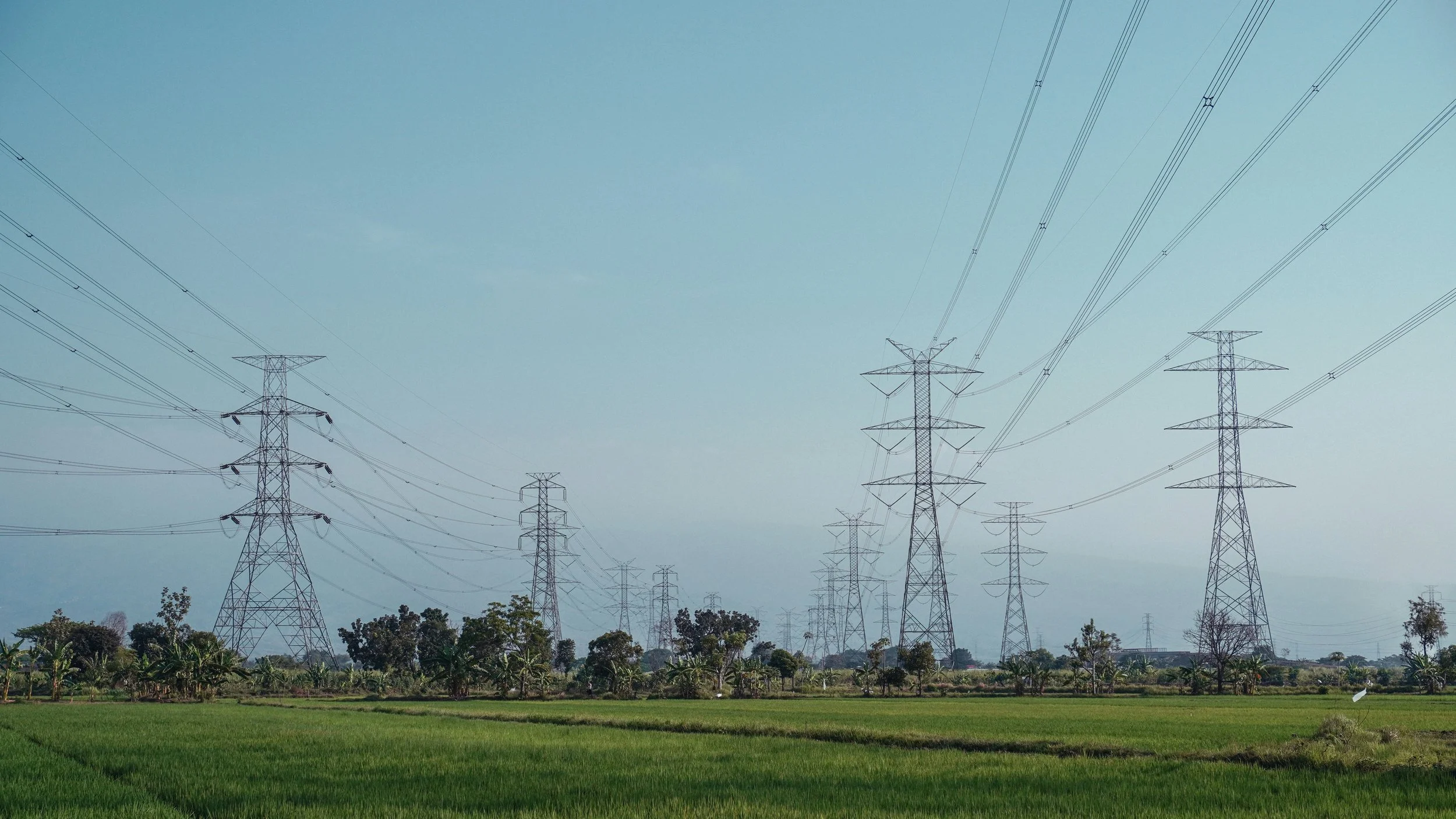
![A landscape scene with green fields and trees in the foreground, and multiple power transmission towers with electrical lines extending across the sky in the background.]()
Critical Service Providers in Rural & Under-Resourced Regions
Organizations delivering essential services in rural and under-resourced regions—such as utilities, broadband providers, clinics, NGOs, local governments, and cooperatives—face unique cybersecurity and connectivity challenges. We help these institutions build long-term resilience, strengthen digital infrastructure, reduce operational vulnerabilities, and improve community safety through accessible, sustainable cybersecurity solutions.
-
![Scientists analyzing samples and working on lab equipment in a clean, modern laboratory with multiple computer stations and laboratory machines.]()
Healthcare Systems & Community Clinics
Healthcare systems, hospitals, and community clinics rely on secure digital infrastructure to protect patient data and maintain continuity of care. Our Cybersecurity Sustainability approach strengthens governance, improves risk visibility, and builds long-term resilience across care networks—especially in rural and under-resourced communities. We help healthcare leaders modernize security, meet regulatory requirements (HIPAA, GDPR, ISO, NIST), and safeguard the integrity of clinical, operational, and administrative systems.
-
![A group of six diverse young adults gathered around a conference table in a meeting room, engaged in discussion with laptops, notebooks, and coffee cups on the table.]()
Academia, Research Institutions & Workforce Pipelines
Universities, research institutions, and technical training centers require secure digital environments to protect intellectual property, maintain research integrity, and support digital learning.
We provide governance frameworks, digital safety protocols, and capacity-building models that help academic institutions reduce cyber risk, strengthen operational continuity, and prepare the next generation workforce—locally and globally. -
![Multiple hands of diverse individuals stacked together in a gesture of unity and teamwork.]()
Chambers of Commerce & Small Business Ecosystems
Chambers of commerce, small business associations, and local economic networks increasingly depend on digital tools for operations, customer engagement, and financial transactions. We help these organizations build sustainable cybersecurity practices, strengthen resilience within their member networks, and reduce systemic community-level vulnerabilities. Our approach provides governance guidance, practical safeguards, and long-term capacity building for small business ecosystems.





CASE STUDIES
-

2026 Senegal Treasury Cyberattack
In May 2026, Senegal’s Directorate General of Public Accounting and the Treasury began restoring state payment and revenue collection services after a malicious cyberattack disrupted parts of its digital information infrastructure. The incident affected platforms responsible for managing public financial flows and prompted phased service restoration, reinforced monitoring, and forensic cyber audits. While authorities did not confirm a large-scale data breach, the attack showed how public finance systems are critical digital infrastructure. This case reinforces the need for resilient governance, continuity planning, and stronger cyber oversight across government platforms that manage essential public services and institutional trust.
-

2026 Singapore Telecommunications Sector Cyber Campaign
In February 2026, Singapore disclosed a coordinated cyber campaign targeting all four major telecommunications operators: M1, SIMBA Telecom, Singtel, and StarHub. The campaign, attributed to advanced persistent threat actor UNC3886, prompted a national cyber defense response known as Operation CYBER GUARDIAN. Although major public disruption was avoided, the incident showed how telecommunications networks underpin government services, finance, healthcare, transport, emergency response, and public trust. This case reinforces the need for sector-wide visibility, coordinated governance, and resilient digital infrastructure before disruption occurs.
-

2025 MTN Group Cybersecurity Incident
In April 2025, MTN Group disclosed a cybersecurity incident involving unauthorized access to personal information of some customers in certain markets. The company stated that its core network, billing systems, and financial services infrastructure remained secure and operational, and that there was no evidence customers’ accounts or wallets had been directly compromised. As one of Africa’s largest telecommunications providers, the incident highlighted how digital trust depends on governance across customer data, platform security, law enforcement coordination, and cross-market response. This case reinforces the need for resilient oversight across telecom ecosystems that support financial access, connectivity, and public confidence.
-

2024 Indonesian National Data Center Shutdown (Indonesia)
A ransomware attack on Indonesia’s temporary national data center brought immigration, passports, airport services, and public applications to a standstill. Travelers were stranded, government operations slowed, and digital identity systems were temporarily inaccessible. Although services were gradually restored, the disruption revealed the vulnerability of centralized government platforms lacking redundancy and resilience. This incident highlights the importance of sustainable DPI design and continuous governance to ensure uninterrupted national services.
-

2024 Global AI Voice-Cloning Fraud Incidents (Global)
Organizations across Asia, the Middle East, Europe, and the United States reported multimillion-dollar losses linked to AI-generated voice impersonation schemes. Attackers used synthetic audio to mimic executives, relatives, and finance leaders, successfully authorizing fraudulent transactions. While no single system failed, these incidents revealed a structural gap in identity assurance across digital operations. This emerging threat shows why cybersecurity sustainability must now include verification protocols, human-in-the-loop safeguards, and governance models adapted to AI-enabled deception.
-

2024 London Hospital Diagnostics Cyberattack (U.K.)
A ransomware attack on Synnovis—the diagnostics provider supporting major London hospitals—shut down blood transfusions, cancer screenings, and critical procedures across the city. Thousands of appointments were canceled, and emergency care was rerouted for weeks. While hospital operations continued under strain, the incident exposed how a single private vendor can disrupt an entire healthcare ecosystem. This event underscores the need for sustainable digital infrastructure, diversified dependencies, and governance models that protect essential health services.
-

2024 U.S. Water Infrastructure Attacks – Multiple State Intrusions
Throughout 2024, drinking water and wastewater facilities in states including Texas, Florida, and Pennsylvania experienced cyber intrusions attributed to foreign state-aligned groups. Attackers attempted to manipulate operational technology (OT) systems that control water treatment processes. These incidents reflect a rising global trend: adversaries targeting essential public services to create widespread societal disruption. Strong cybersecurity sustainability measures are now essential for protecting water utilities.
Strengthen Cyber Risk Governance Before Risk Becomes Crisis
Global Cyber Security Advisory Group supports institutions and communities working to strengthen digital security, modernize governance, and protect the systems society relies on most.
As a global consortium grounded in the Cybersecurity Sustainability Standard™, we bring together governance expertise, research, and applied insight across sectors and regions to support durable security outcomes, responsible technology adoption, and digital resilience that can hold over time.
If your organization is navigating AI, quantum readiness, Digital Public Infrastructure, critical services, or complex cyber risk environments, GCS Advisory Group can help translate governance into practical action.